Attorney-client privilege is a cornerstone of effective legal risk management, but its application is nuanced — especially for in-house counsel. The privilege protects confidential communications between an attorney and a client made for the purpose of obtaining or providing legal advice. However, courts scrutinize claims of privilege, particularly when in-house counsel are involved or when communications comprise of both legal and business advice. The law governing privilege can vary significantly by jurisdiction, thus, it is important to seek the advice of counsel prior to any communications.
Key Considerations for In-House Counsel:
To maximize protection and avoid inadvertent waiver, legal teams and senior executives should keep the following in mind:
In-house counsel face extra scrutiny
Courts recognize that in-house counsel often wear multiple hats. Privilege will apply only where the primary purpose of the communication was to obtain or provide legal — not business — advice.
Privilege applies only to legal — not business — advice
Privilege attaches only to communications where the predominant purpose is legal advice, such as internal investigations to assess whether employees breached a contractual obligation, reviewing marketing materials for compliance with applicable law, or drafting and analyzing contractual language. Clearly distinguish legal analysis from business discussions, particularly in writing.
Confidentiality underpins privilege
Limit distribution of privileged communications to those who “need to know” and avoid including third parties unless necessary and protected by a recognized exception. This is especially important to keep in mind when discussing privileged information while working remotely. There are no exceptions for spouses, family, roommates, or neighbors.
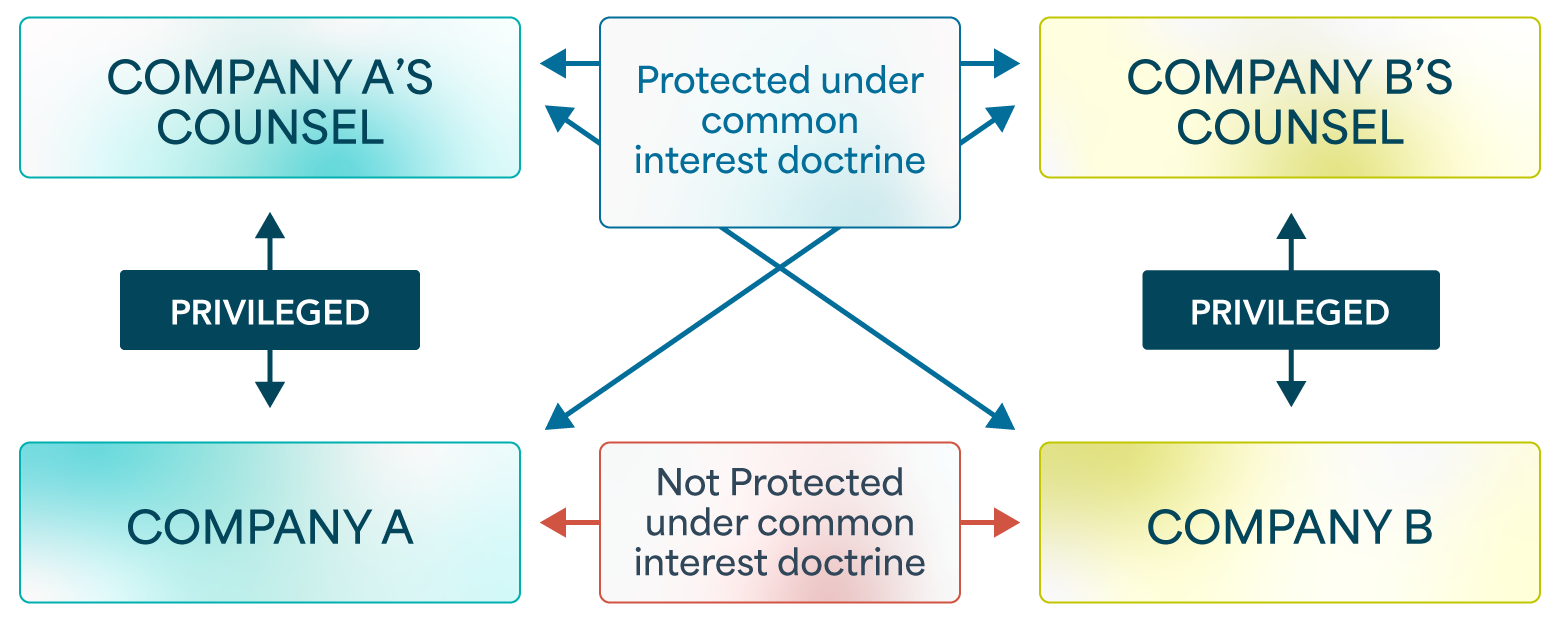
Common-Interest Exception
For example, in California, generally the common-interest exception extends the privilege to communications between parties and their counsel relating to potential civil litigation provided that:
- The parties have some common litigation interest (a purely personal or business-oriented interest is insufficient); and
- The communications are made to further that shared legal interest.
This exception may also apply where parties maintain separate counsel but coordinate through a joint defense or litigation strategy.
Where it applies, the common-interest exception typically only protects communications involving counsel.
Do not assume privilege exists
Even if you believe a communication is privileged, write with the expectation that they could be reviewed by a court. Privilege does not necessarily extend automatically to subsidiaries or affiliates. Ensure formal retention and clear documentation when representing multiple entities or working with advisors. Additionally, the law governing privilege can vary significantly by jurisdiction, thus, it is important to seek the advice of counsel prior to any communications.
Labels help but don’t control
Mark emails or memos as “Attorney-Client Privileged” and “Confidential,” but remember: substance, not form, determines privilege. Where possible, clearly reference the legal advice sought or provided.
Be explicit in requests for legal advice
Directly address in-house or outside counsel, specify the legal issue, and avoid copying attorneys merely to shield a document.
Separate legal from business content
When communications blend legal and business matters, separate them or document the legal purpose clearly.
By proactively managing privilege, in-house counsel and executives can strengthen the protection of sensitive communications, preserve confidentiality, and reduce litigation risk.